06 August 2010

The cull in legal aid for family work - 46% fewer firms

Even the Legal Services Commission has admitted that a cut of 46% of solicitors firms providing family law services was not intended - see "LSC chief: tender outcome "unintentional" - Law Society Gazette 5th August.   Even if true, that is little consolation to anyone including, in particular, the many already disadvantaged people who may now struggle for access to justice.

The whole tender process was a debacle with the outcome of smaller (usually local) firms of solicitors and sole practitioners being forced out of the family law market.  In some places, well-established local firms have not been successful in securing a contract and the franchise has been granted to a bigger firm located elsewhere.  In the bidding process many promises were made by such larger firms - e.g. that they did not need to recruit additional staff or set up new offices etc.  There appears to be no system for policing such promises.

The longer term consequences of this hardly bear thinking about as many skilled and experienced lawyers who have consistently devoted their work to providing legally aided family law services for their clients will now be lost to the system.  The coalition government would have done well to apply the brakes to several reforms initiated by the Labour government and to take a more measured approach to what needs to be done.  Their bull in a china shop approach is unacceptable even if money does have to be saved.

Addendum 20th August 2010: See Law Society Gazette.  Some 31 firms in the NE of England are seeking a judicial review of the LSC's tender process.  The House of Commons Justice Committee has been asked to convene to look at the matter.  The Family Judges are extremely concerned.  The public ought to be also extremely concerned.

Secretive justice - is it justice?

"Secrecy, being an instrument of conspiracy, ought never to be the system of a regular government" - Jeremy Bentham (1748-1832).

In 2009, Justice published an interesting and important report on the extent of secrecy which has gradually built up over recent years in English legal proceedings - see Secret Evidence.  This is well worth reading for those who are concerned about modern legal process.

Should Bentham's notion still apply or is it somehow only relevant to a bygone era?  If it should apply, why are there so many exceptions?

05 August 2010

An important tribunal of which seems to be little known

The Investigatory Powers Tribunal (IPT) was set up by the Regulation of Investigatory Powers Act 2000 s. 65 - (often referred to as RIPA). Investigatory powers which may be authorised are:  interception of communications; acquisition and disclosure of communications data; surveillance and covert human intelligence sources and investigation of data protected by encryption.  The 2000 Act provides for some scrutiny over the use of these powers.  There is an Interception of Communications Commissioner; an Intelligence Services Commissioner and there is the Investigatory Powers Tribunal.  Numerous public authorities - including local councils - are entitled to use certain of the powers.  It is a matter of serious concern that so many public bodies are equipped with these powers and that they are frequently used for the investigation of relatively low level activity some of which may not even be unlawful.

The IPT has recently decided Paton v Poole Borough Council where a mother was secretly investigated in relation to what the Council perceived to be her attempt to avoid the Council's school allocation policy. The case is well-covered on the Panopticon Blog which is managed by barristers at 11 King's Bench Walk.   The investigation against Mrs Paton including monitoring movements of family members and their car and examining the contents of their rubbish.  The Tribunal ruled that investigating a potentially fraudulent school application was not a proper purpose for the use of the RIPA powers.

In late 2009, the Supreme Court ruled that, even where a challenge to the use of the investigatory powers is based on human rights grounds, the challenge must be taken to the IPT instead of via judicial review in the High Court - see R (A) v B [2009] UKSC 12 .  Given the secretive nature of the IPT this is regarded by many as inherently unjust and alien to the general English culture of open adjudication.

The Guardian 2nd August published an article arguing that it is time to Review the Tribunal.  Further information about the IPT may be read at Security Services.

A dog which has been reprieved - contingently ....


The case of R v Davies [2010] EWCA Crim 1923 may be of interest to dog owners.  A destruction order for an alsatian was made but the Court of Appeal has quashed that order and put in its place a "Contingent Destruction Order" requiring the owner to keep the dog under control or else ....!  Such orders can be made under s.4A of the Dangerous Dogs Act 1991.  That section was inserted into the 1991 Act by an amending Act in 1997.  See here for further information on the law.

03 August 2010

There is no honour in killing ... appalling murders in Blackburn

The Guardian 3rd August reports the conviction of four men for the murder of two people in Blackburn, Lancashire.  See also The Independent 2nd August.  The persons killed were not the intended victims.  The men: Ibrahim (aged 21); Iqbal (25), Sadek Miah (23) and Mohammed Miah (19) received life sentences with tariffs, respectively, of 28 years, 25, 21 and 19 years.  Henriques J referred to these crimes as "shocking and terrible murders".

In some quarters these crimes are referred to as "honour killings".  This terminology ought to be deprecated.  It is murder and should be referred to as that and that alone.

See the BBC website and the reader is also referred to Gendercide.

02 August 2010

The ever expanding influence of the EU in criminal matters

The web of European Union Police and Judicial Co-operation is expanding.

From 15th August 2010, in English criminal proceedings, account will be taken of convictions in other EU Member States in a similar way to how domestic convictions are taken into account.  This comes about because the Coroners and Justice Act 2009 s.144 and Schedule 17 is implemented from that date - (see Commencement Order No.5).    This will have far-reaching implications.  For example, in sentencing a person, the court will be able to treat EU convictions as an aggravating factor.  Also, it will usually be possible to adduce EU convictions as evidence of bad character.

The UK is bound to implement this under EU Council Framework Decision 2008/675/JHA and 15th August was the latest date for implementation (see Article 5 of the Framework Decision).  A Ministry of Justice Circular (2010/2) offers more detailed explanation and explains that the new law generally only applies to EU convictions imposed on or after 15th August 2010.

01 August 2010

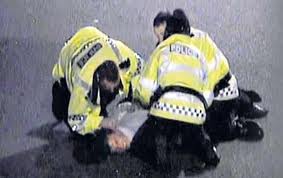
What happened in Wigan to a War Hero

The estimable Jack of Kent legal blog carries a post about What Happened to Lance Corporal Mark Aspinall in Wigan on a night out in July 2008.  Jack of Kent has raised this because two of the officers have been acquitted by a jury at Manchester Crown Court of assault occasioning actual bodily harm to Mr Aspinall.  A verdict on the third officer - Special Constable Peter Lightfoot - is awaited in the near future - see BBC 30th July 2010.

This case is interesting in that Wigan Magistrates convicted Mr Aspinall of assault on the Police and sentenced him to 3 months imprisonment suspended with a condition of 200 hours unpaid work.  Mr Aspinall was also ordered to pay £250 in compensation - see The Times 1st December 2008.  Mr Aspinall appealed his conviction to the Crown Court and the conviction was quashed - see Daily Mail 1st December 2008.

The Independent Police Complaints Commission (IPCC) managed an investigation into this matter and their brief statement may be read here.  This report names the officers as Sergeant Stephen Russell, P.C. Richard Kelsall and Special Constable Lightfoot.  The report informs us that charges of assault occasioning actual bodily harm and conspiracy to pervert the course of justice were brought and a further charge against Special Constable Lightfoot of perjury.  Please see the Jack of Kent post.

Addendum 1st August 2010:  See the Manchester Evening News report on the case dated 1st August.

Addendum 2nd August 2010: Special Constable Lightfoot was convicted by a jury of assault occasioning actual bodily harm to Mr Aspinall - see Manchester Evening News 2nd August.  Lightfoot is also guilty of perjury which occurred at the Crown Court hearing of Aspinall's appeal.  Further coverage of the verdict is on BBC News Manchester.

See also the IPCC statement relating to the conviction.   Here is what they have to say:

It is clear from the evidence that Mr Aspinall was drunk, aggressive and causing a nuisance. He was exhibiting the kind of behaviour that police officers have the unfortunate duty to deal with on a regular basis. That is why officers are trained to deal with such individuals in a professional manner. However in this incident Special Constable Lightfoot's training would appear to have been replaced by a red mist. His actions were violent, excessive and unjustified.
I am grateful to Greater Manchester Police and our investigators for the thorough and professional work they have done in examining this matter. I have noted the jury’s decision in relation to the other officers and we respect that. The IPCC and Greater Manchester Police must still consider whether it is appropriate for any of the officers to be subject to misconduct action.”
This makes it clear that Mr Aspinall's conduct left a great deal to be desired.  Nevertheless, the assault occurred when he was down on the ground with 3 officers over him.  Whatever Aspinall was up to in the Walkabout Bar occurred before the confrontation on the streets with the three officers.  For whatever reason, it appears the Aspinall was not charged with any matter other than the assault on the Police for which he was later acquitted on appeal from the magistrates.  The Magistrates' Court trial is interesting in that the magistrates did not have the benefit of any visual evidence but, on appeal, the Crown Court did.  Another matter which is not reported is whether Aspinall had any legal representation in the Magistrates' Court.  Legal Aid is not easy to get in the magistrates' court since the defendant has to pass both a means test and an interests of justice test.  Where a charge is serious (as is Police Assault) then the interests of justice test is normally met since there is the possibility of imprisonment and unrepresented defendants have to face the difficulty of examining professional police witnesses.  That is something which requires considerable forensic skill and ability.

Lightfoot will be sentenced at the beginning of September.

Attorney-General - The Harry Street Lecture at Manchester University

  The Attorney-General Lord Hermer KC delivered the Harry Street Lecture at Manchester University. The text has been published - HERE . He o...